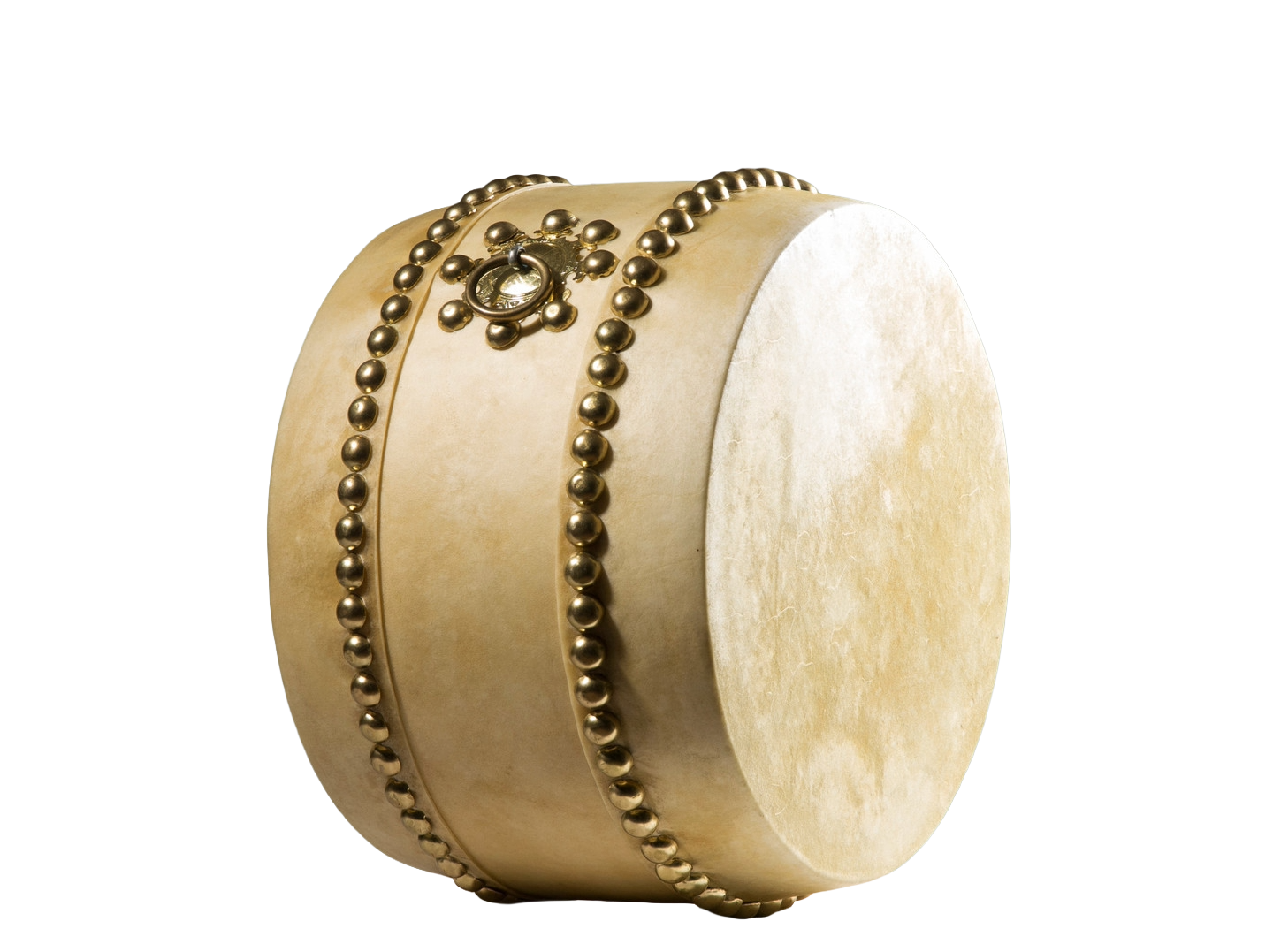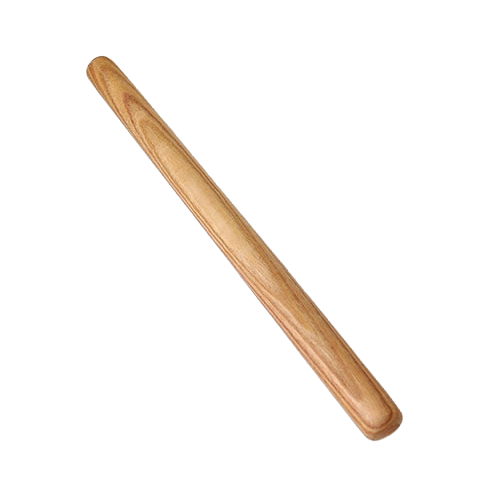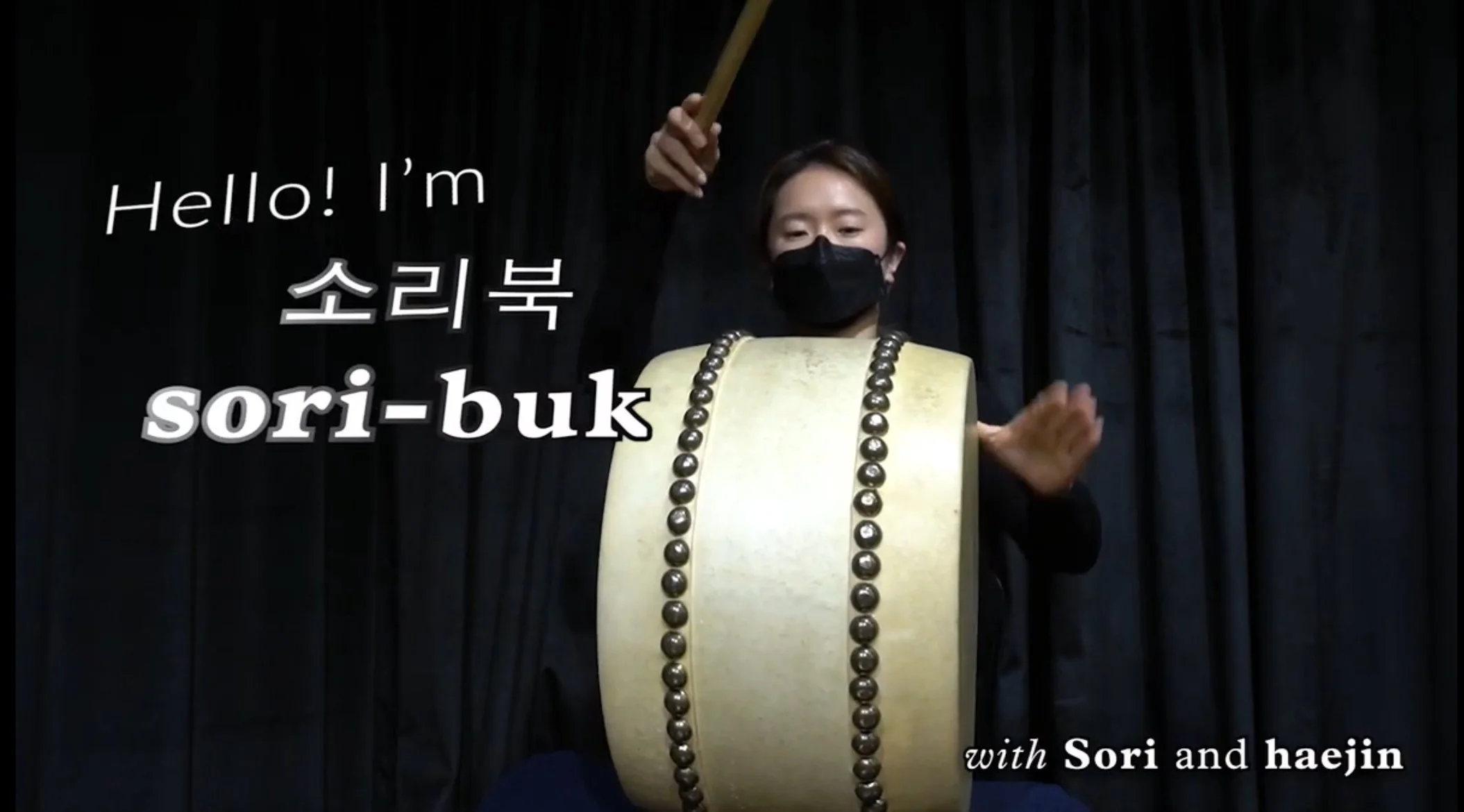
(enjoy this introductory video to the sori-buk, made in collaboration with Sori Choi of SORIPERCUSSION !)
The sori-buk plays a significant role in pansori’s performance by grounding and guiding the vocalic body. Whereas the voice is a cartography of disembodied textural spectrums, the drum acts as a structured map of tactile touch and rhythm. Each of the seven rhythmic structures that lay this groundwork, varying in speed and ir/regularity, move between states of relaxation and tension*—of widening and narrowing the voice’s timbral spectrums and passage of breath. These temporal boundaries, from the spacious weight of jinyangjo to the lilting density of eot-mori, provide a framework for the embodied and articulated narratives that the sorikkun aims to relay through their dislocated narratives. Each of the drum’s strikes, from the foundational deong, the bass-like goong, and the exclamatory marker of ddak, serve to meld into the singer’s narrations—adding the life source of heung*, currents of energy that elevate the sorikkun’s vocalities.
소리북: a thick, heavy barrel drum used particularly for pansori performance.
*Folk performers and practitioners refer to these processes as “맺고, 풀고” (“to knot, to untie”), which parallels the range of densities that differ depending on each style, song, or body.
*흥: a corean word that describes an affect that encompasses the electricity of excitement and enthusiasm
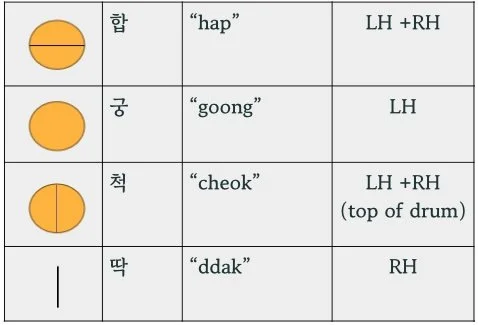
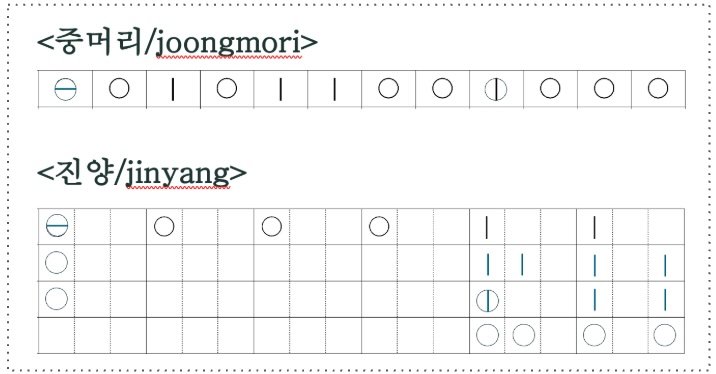
using this chart, try playing these two jangdan (rhythms) below!
the sori-buk
소리북